
AI Search
How to Get Your Website Cited by ChatGPT, Google AI Overviews, and Perplexity
AI assistants now answer the question and name a few sources. Here is what those citations are, how each engine picks them, and what you can actually control.
Published by Coco Design
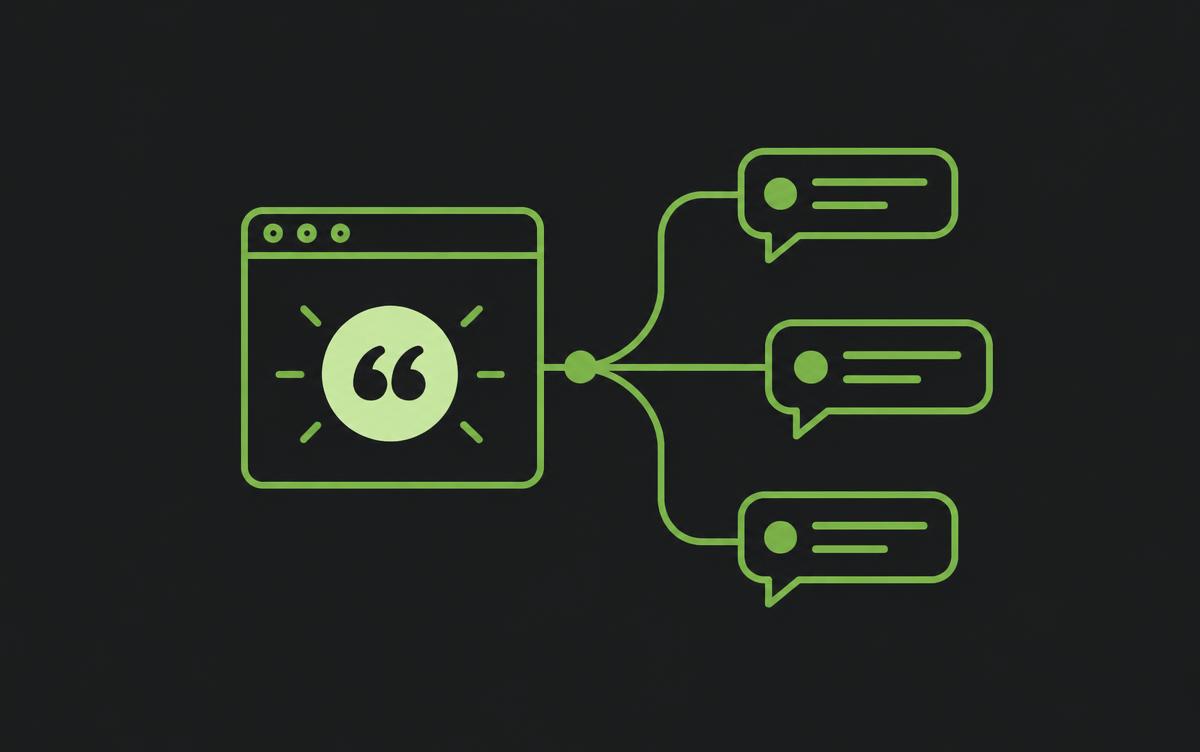
More and more people now get their answer before they ever click a website. They ask ChatGPT for a recommendation, read a Google AI Overview at the top of the results page, or run a research question through Perplexity. In each case the assistant writes the answer and names a handful of sources it relied on. Those named sources are citations, and they are quickly becoming one of the most valuable forms of visibility a business can earn online.
What an AI citation actually is
An AI citation is a link or source attribution that an AI assistant includes alongside its answer. It is not a ranking position and it is not a paid placement. The assistant assembles an answer from material it can retrieve, then points to the pages that supported it. Being cited means your page was used to build the answer, which puts your name in front of someone at the exact moment they are deciding what to do.
Two things follow from that. First, a citation can send traffic even when it appears on a page you do not control. Second, a citation can influence someone even when they never click, because the assistant has already told them your business is a credible source on the topic.
How the major AI search tools choose sources
ChatGPT search retrieves live web results and cites the pages it draws from. Pages that answer a question plainly, in text that can be read without running JavaScript, are far easier for it to use.
Google AI Overviews are generated from Google's existing index and link out to supporting pages. Traditional SEO still matters here: if Google cannot crawl and index a page, that page cannot appear in an Overview.
Perplexity runs its own retrieval and shows numbered citations next to almost every sentence. It favors pages with clear structure, specific claims, and content that reads as a direct answer rather than as marketing copy.
The engines differ, but the overlap is larger than the difference. All three reward pages that are crawlable, specific, well structured, and consistent with what the rest of the web says about you.
Practical steps that improve your chances
- Answer the question in the first sentence. Write each section so its opening line stands alone as a complete answer. Assistants quote self-contained sentences; they skip paragraphs that build slowly to a point.
- Use real questions as headings. Headings phrased the way people actually ask give a retrieval system an obvious place to pull from.
- Keep the content in the HTML. If text only appears after a script runs, or sits inside an image or a PDF, some crawlers will never see it.
- Add structured data. Organization, Service, Article, FAQPage, and BreadcrumbList markup describe your pages in a format machines read without guessing.
- Keep your business facts identical everywhere. Name, address, phone number, and hours should match across your site, your Google Business Profile, and any directory that lists you. Conflicting details make an assistant less confident about citing you.
- Be specific. Named services, named locations, real processes, and real detail give an assistant something concrete to quote. Generic claims give it nothing.
- Earn mentions off your own site. Reviews, directory listings, press coverage, and industry profiles are all sources these systems read.
- Keep pages current. Dated, maintained content is easier to trust than a page that has not changed in six years.
What no one can promise
No agency can guarantee that ChatGPT, Google, or Perplexity will cite you. The systems change frequently, the answers vary by how the question is phrased, and none of them publish a ranking formula. What you can control is whether your site is readable, answerable, structured, and consistent — the conditions that make a citation possible in the first place.
Where to start
Start with the pages that already carry your most important questions: your service pages, your about page, and your contact details. Rewrite the opening sentence of each section so it answers directly, confirm the page is crawlable, and make sure your structured data matches what a visitor actually sees. That work also helps ordinary search rankings, so nothing here is wasted effort.
At Coco Design in Pensacola, this is the work we do for clients whether they serve one city or the whole country. If you want to understand how the terminology fits together, read What Is AI Search Optimization? and SEO vs. AEO vs. GEO, or see how this is reshaping the way people find local businesses.
Want help applying this to your site? Learn about AI Search Optimization at Coco Design or start a conversation with our team.