
AI Search
How AI Search Is Changing the Way People Find Local Businesses
People no longer type three words and scan a map. They describe their situation and read a recommendation — which changes what a local business has to publish.
Published by Coco Design
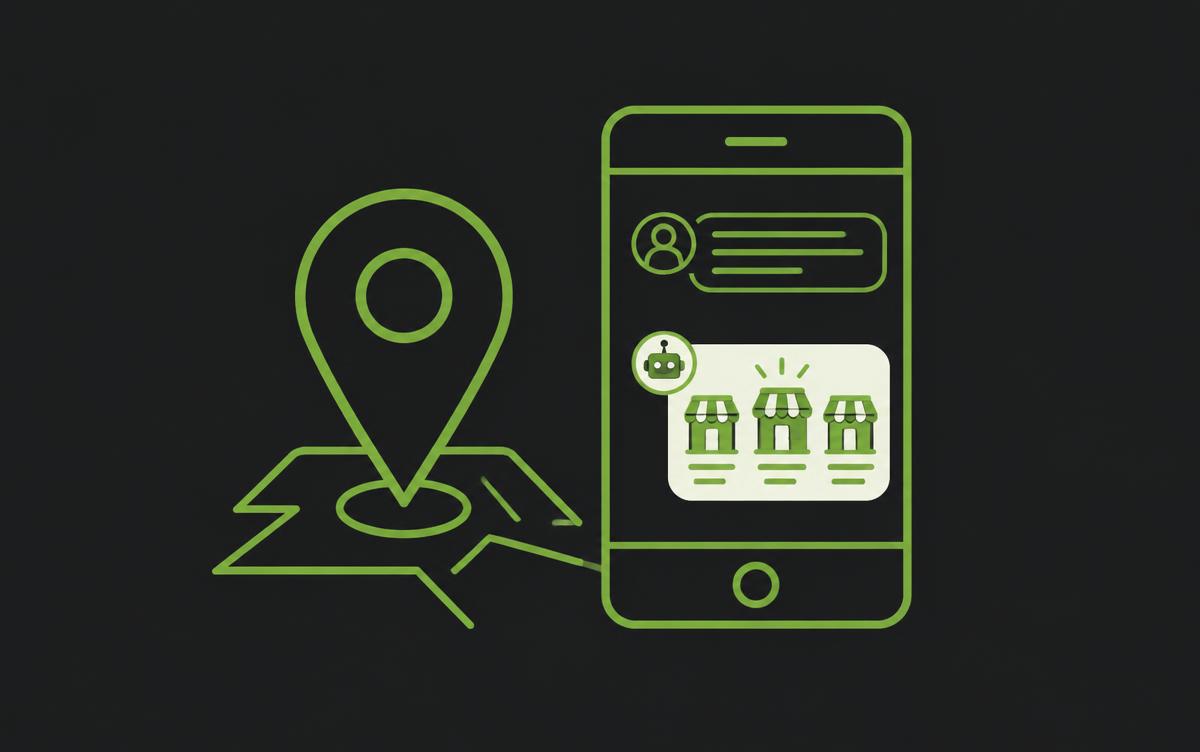
AI search is changing how people find local businesses by replacing a short query and a map of options with a conversation that narrows the field before the customer ever sees a list. Instead of scanning results, they read a recommendation — and the businesses named in that recommendation get the call.
Three versions of the same need
Consider how differently these read:
- "Who is a good web designer near me?" — a classic local query. Traditional search answers it with a map pack, proximity, reviews, and ten links.
- "What web design companies serve small businesses in Pensacola?" — a filtered question. The customer has already added an audience qualifier, and an assistant will try to match businesses that describe themselves that way.
- "Who can help my Pensacola business improve its website and SEO?" — a problem statement. There is no keyword to rank for here. The assistant is looking for a business whose published material shows it does both things, in that place, for that kind of client.
Traditional local search rewards proximity and reviews. Conversational AI search rewards evidence — content that demonstrates the exact combination of service, audience, and location the person described.
What still matters, and what matters more
- Google Business Profile. Still the backbone of local discovery, and still a source AI systems read. Complete categories, services, hours, and photos.
- Local SEO. Location-relevant pages, accurate contact details, and local links remain the baseline.
- Reviews. Volume and recency help in maps; the language inside reviews increasingly shapes how assistants describe you.
- Business directories. Consistency across listings makes your details easier to trust.
- Website content. The single biggest lever. If your site never says who you serve or where, no assistant can say it for you.
- Structured data. Organization, LocalBusiness, and Service markup state your facts in a format machines do not have to infer.
- Local authority. Chamber pages, community involvement, local press, and partner sites all reinforce where you belong.
- AI citations. The visible result of all of the above — being the source an assistant names.
What this means for a Pensacola business
A business that only says "we build great websites" cannot be matched to "a Pensacola firm that works with small nonprofits on accessible websites." A business that publishes its services, its service area, the kinds of organizations it works with, and how its process runs can be matched to dozens of specific questions. That is the practical shift: descriptive content beats keyword density when a machine is doing the matching.
Coco Design has worked from downtown Pensacola since 1994 and serves clients here and across the United States, so both halves of this matter to us — being found by the neighbor down the street and by the company three states away with a specific problem.
A reasonable starting point
Write down the ten questions a good customer would ask before hiring you, answer each one plainly on your site, confirm your business details are identical everywhere, and keep your Google Business Profile current. Then test the questions yourself in ChatGPT, Google, and Perplexity and see who gets named.
For the underlying mechanics, read how to get your website cited by ChatGPT, Google AI Overviews, and Perplexity, and for the terminology, SEO vs. AEO vs. GEO.
Coco Design offers AI Search Optimization for local and national businesses. Start a conversation or call (850) 434-2626.